Faculty members from the UdL Faculty of Medicine lead new research on brain development
The research, published in Cellular and Molecular Life Sciences, identifies a previously unknown role of the cyclin D1 protein in the formation of the cerebral cortex.
Download Pdf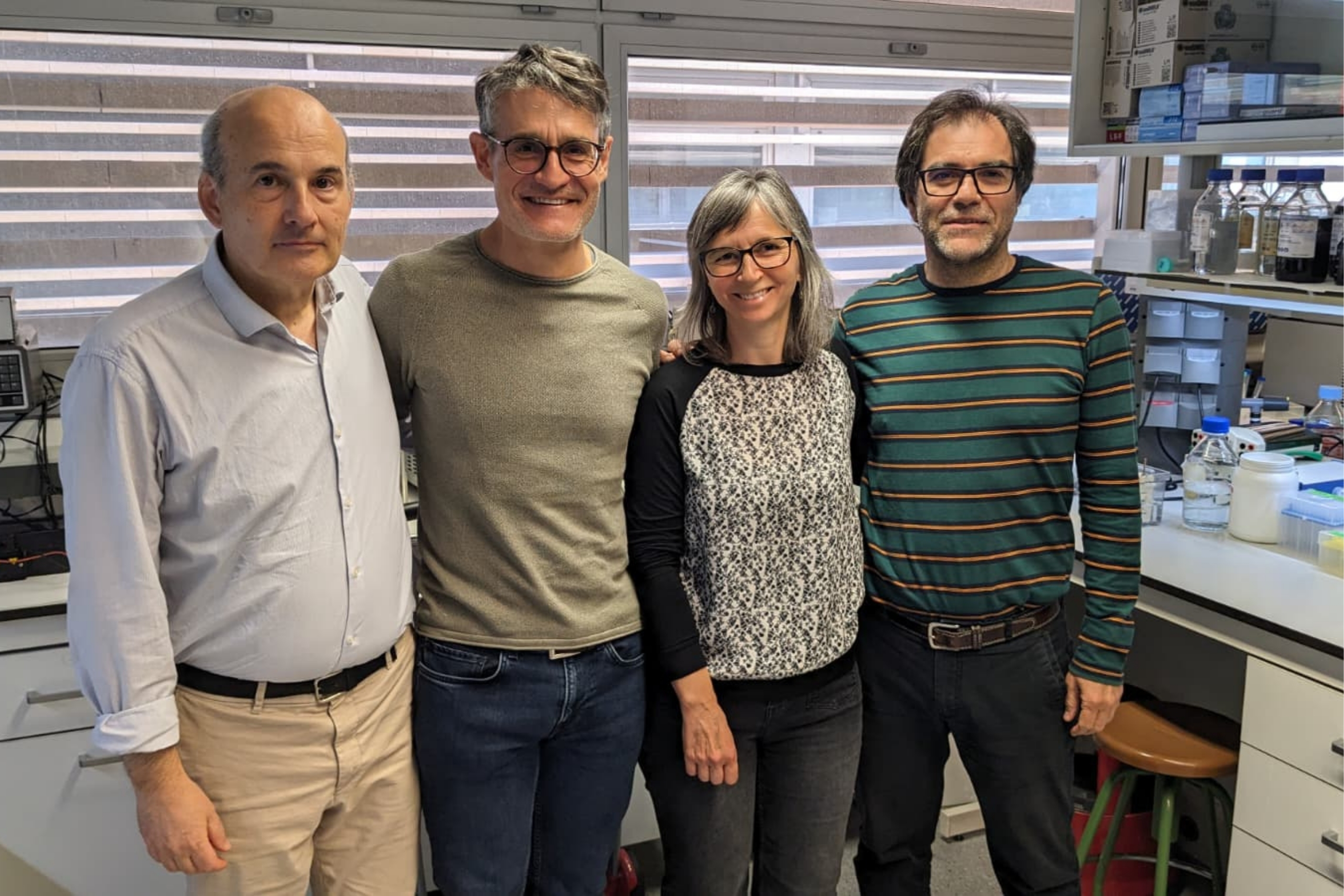
Dr. Joaquim Egea, Dr. Neus Pedraza, Dr. Francisco Ferrezuelo and Dr. Eloi Garí, professors of the degrees of Biomedicine, Human Nutrition and Dietetics and Medicine of the Faculty of Medicine of the University of Lleida, the researchers of the IRBLleida, have led a study that identifies a function, in order to uncover, of the cyclin protein D1.
The research focuses on the formation of the cerebral cortex, the most evolved part of the brain and the area responsible for abilities such as abstract thinking and cognitive functions.
This protein is known to play a role in the cell nucleus, where it regulates cell division. However, the research team has discovered that cyclin D1 is also present in the neuron cytoplasm, where it performs a very important function during the embryonic development of the cerebral cortex.
The study, published in Cellular and Molecular Life Sciences, shows that cytoplasmic cyclin D1 plays a key role in:
- neuronal migration
- the organization of cerebral layers
- the proper formation of neuronal connections
“These results provide a new perspective on the molecular mechanisms involved in brain development, beyond the control of the cell cycle,” explains Dr. Neus Pedraza. The researcher adds that “understanding non-conventional functions of well-known proteins may be key to identifying new therapeutic strategies for neurological disorders related to development and, potentially, for other pathologies such as cancer, where cyclin D1 also plays a highly relevant role.”
Dr. Joaquim Egea highlights that “when the human genome was sequenced, it was found to contain far fewer genes than had initially been predicted, suggesting that many of them have multiple functions. The case of cyclin D1 is paradigmatic in this regard, since it regulates cell division but also carries out other specific functions during nervous system development, as we have demonstrated in this study.”